Like a visitor from the future bringing us treasures from our collective past, The Lucas Museum of Narrative Art has just opened in Exposition Park in Los Angeles. Located near USC, the Natural History Museum, and the L.A. Coliseum, in a striking 300,000-square-foot spaceship-like building designed by Ma Yansong of MAD Architects to house George Lucas’ and Mellody Hobson’s vast collection of art and objects .
Lucas’ epic journey to launch the museum is the culmination of a lifetime of amassing a 40,000 object collection, and a search for a location that involved consideration of both Chicago and San Francisco before Los Angeles, multi-year delays, spiraling costs (total cost estimated at $1Billion of Lucas and Hobson’s dollars), and a series of staff hirings and departures resulting in Lucas himself being the chief curator.
Despite all this (or because of it), the museum will nonetheless thrill visitors, both tourists and locals with its extensive displays. More importantly, the museum will draw many who find art museums intimidating – and hopefully become a gateway experience for art appreciation.
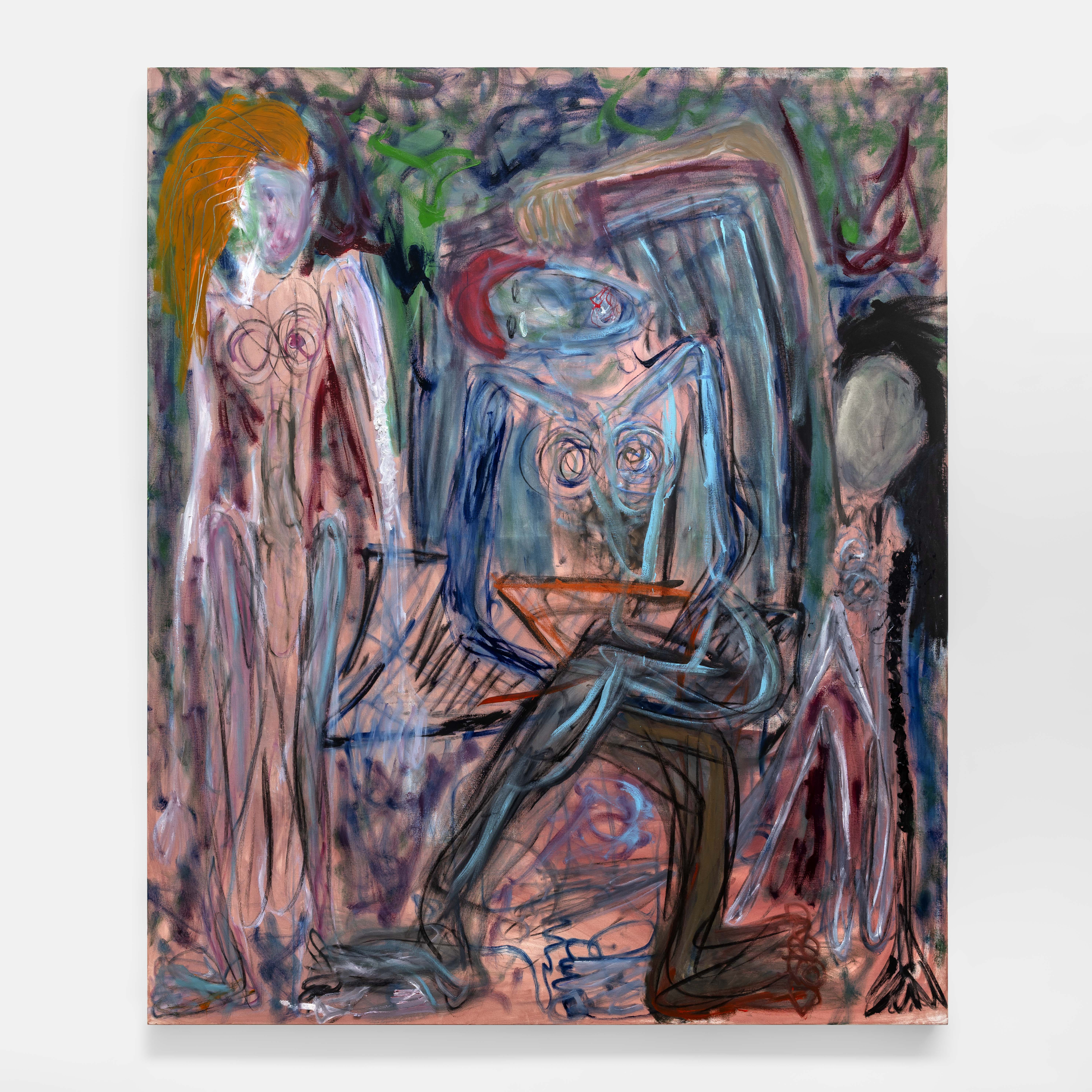
Lucas has described the museum as being devoted to “the people’s art” – which, to him, is somehow different from most contemporary art, in so far as it requires no interpretation or art history education, and is rooted in popular culture, as well as in the depiction of everyday life throughout the ages. For Lucas, “popular art” encompasses everything from the iconic painting of dogs playing poker to works by artists as diverse as Ernie Barnes, Van Gogh, and Mary Cassatt.
Calling the Lucas a “museum of narrative art” does not mean that its holdings would not be at home at other museums. Until the 19th Century, the majority of all art was narrative, whether inspired by Greek and Romanmyths, or religious works inspired by the Old and New Testaments. The majority of the art at most encyclopedic museums such as The Louvre, The British Museum and The Metropolitan Museum of Art, is narrative art.
However, in the 19th Century and early 20th Century, the invention and development of photography made documenting the real more possible, driving artists to consider the subjective rather than the objective, thus spawning such art movements as Impressionism, Fauvism, Cubism and abstract art.
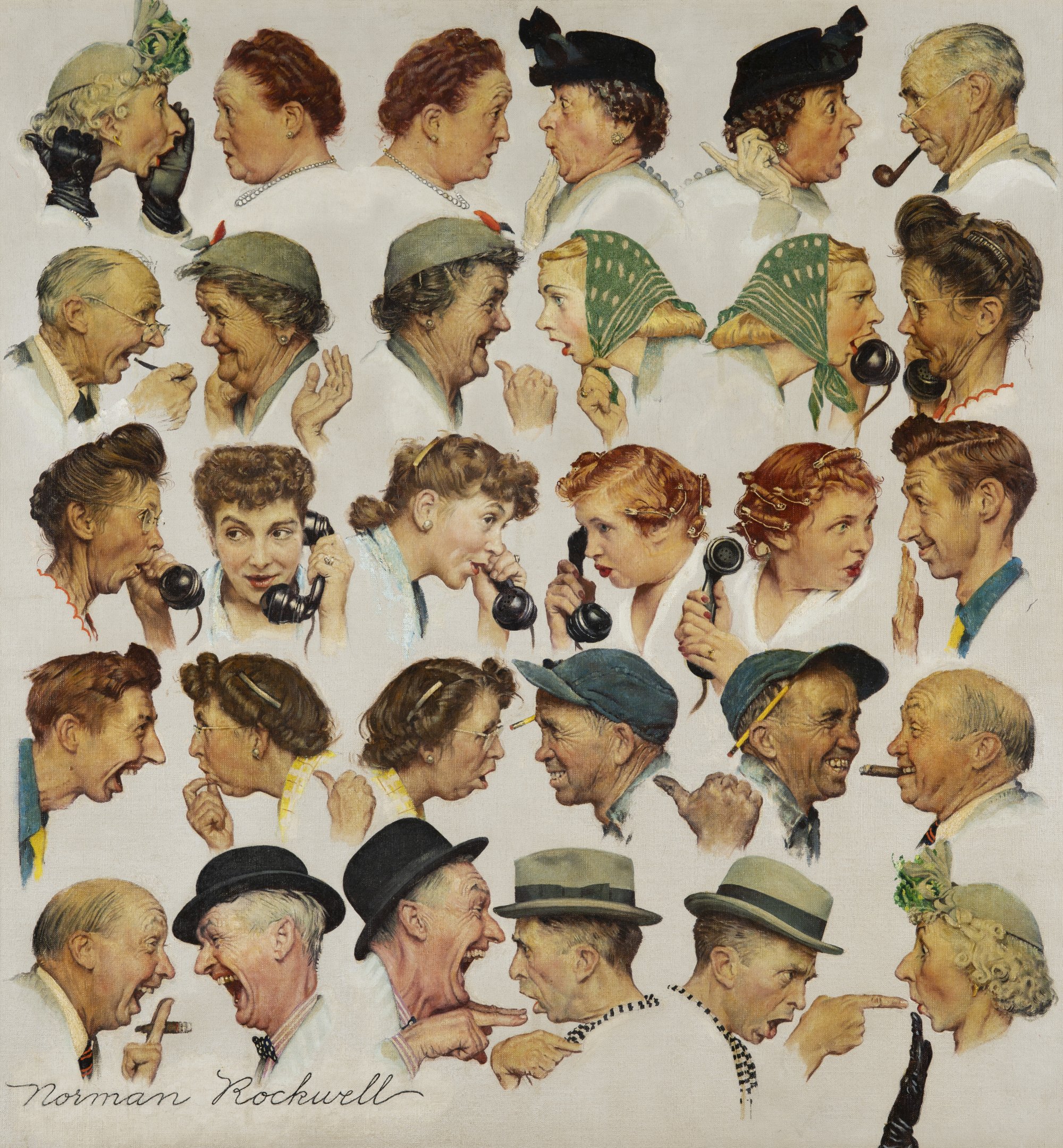
Norman Rockwell, The Gossips. Courtesy of the Lucas Museum of Narrative Art
At the same time, magazines and newspapers popularized prints by illustrators such as Norman Rockwell,Maxfield Parrish and Thomas Hart Benson that were affordable to most Americans, as well as comic books that became popular with children of all ages. Suddenly, average Americans could afford to have these prints in their homes and offices. These illustrations and comics that inspired Lucas are the core of his museum.
When you first visit, it’s recommended you begin with the small installation on the ground floor of the arrival area, The History of Narrative Art. The small dark room where, illuminated against the walls, are drawings of animals made in broad dark strokes that seem to race across the surface. This is an immersive reproduction of the caves at Lascaux, one of the earliest human drawings. Other rooms contain reproductions of great works from the Greek and Roman eras, as well as the Renaissance, including a reproduction of the Vatican’s Sistine Chapel, as well as a life-sized 3D reproduction of Michelangelo’s David.
The building’s fourth floor is its central exhibition space. If the building’s outside is an unconventional shape with no 90-degree corners, the indoor space uses free-standing walls to create rooms that give no sense of the amoeba-like building that surrounds it. But be forewarned: There’s a lot to see and putting hydration stations and snack bars on this floor’s terraces would help for those who need recharging.
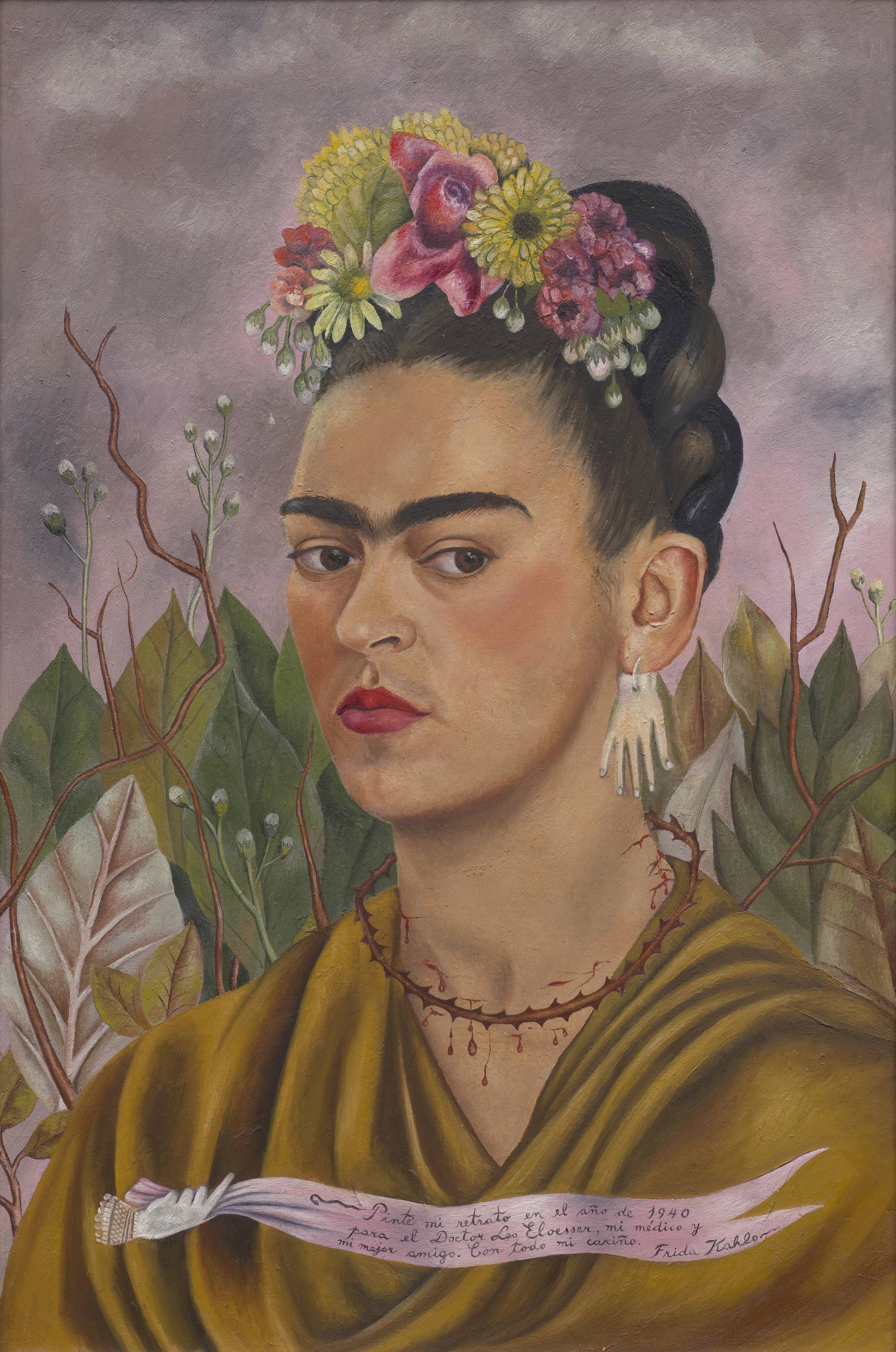
Frida Kahlo, Autorretrato dedicado al Dr. Eloesser (Self-Portrait Dedicated to Dr. Eloesser) Courtesy of the Lucas Museum of Narrative Art
The museum’s collection is non-chronological, a-historical, and non-hierarchical, with visitors encouraged to just enjoy the works and decide what they like, something akin to Lucas’ own populist aesthetic. However, there’s no harm in giving greater context to what is on display. And, contrary to Lucas’ belief, some works are more important than others (historically and art historically). Hence, when a painting by Artemisia Gentileschi, or a self-portrait by Frida Kahlo, is placed casually among others, Lucas does his visitors a disservice by not informing them of what they’re looking at.
The galleries are organized thematically, rather than chronologically or art historically, with rooms devoted to artists such as Norman Rockwell, Maxfield Parrish and Thomas Hart Benton, as well as human activity (love, community, family) and specific themed rooms (fantasy and adventure, as well as architecture, photography and Manga).
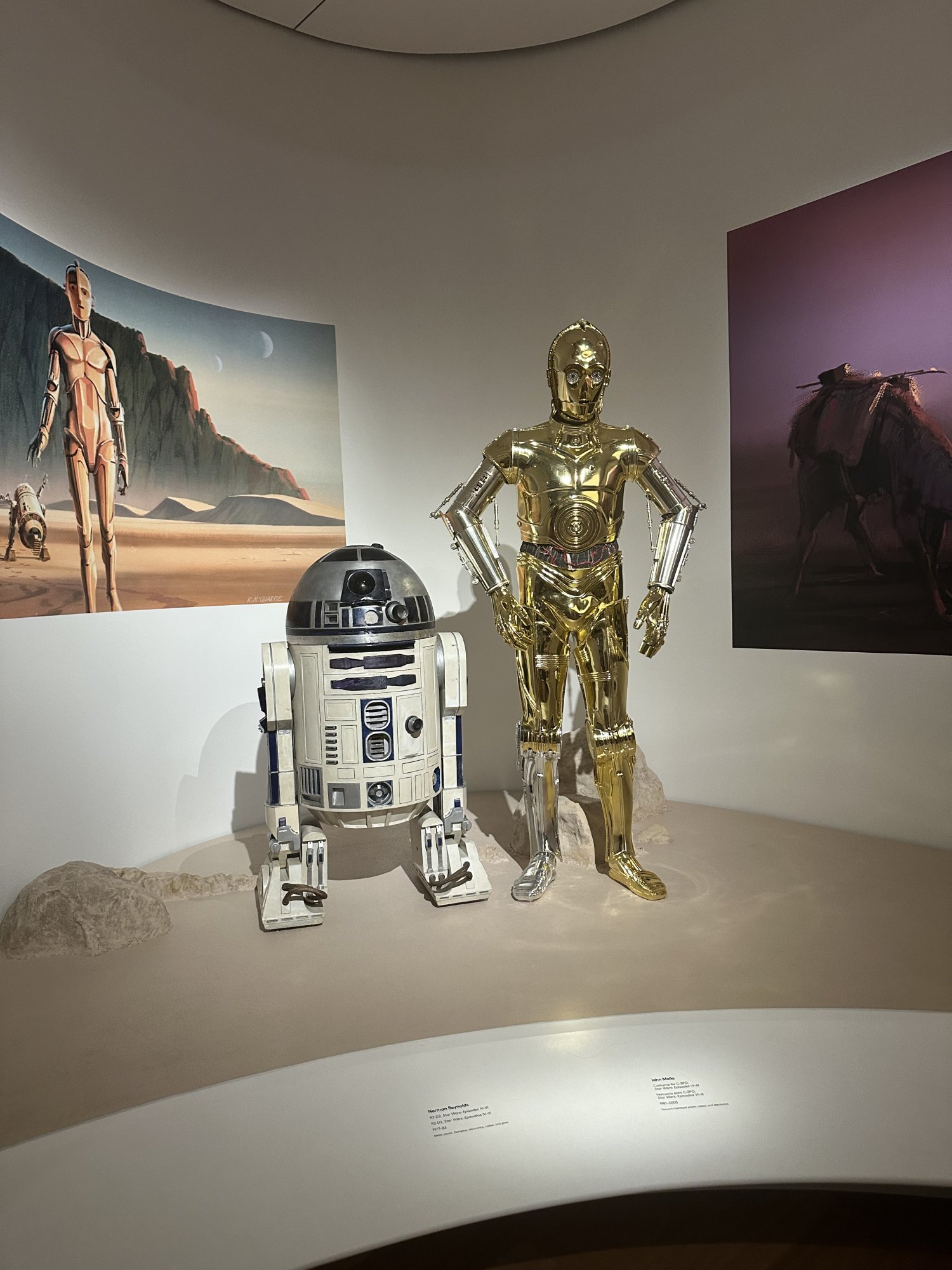
Star Wars at the Lucas Museum. Photo by Tom Teicholz
And yes, there is a large room of Star Wars‘ artifacts, with full-scale models and many selfie opportunities. There is also a room devoted to art related to American history and the American West.
In addition, there are rooms featuring works from newspaper comics, including Pogo and Doonesbury, sci-fi comic strips, magazines and underground comics of the 1960s, with original artwork of R. Crumb and Fritz the Cat that ignited Lucas’ imagination as a youth, as well as the first piece of art he ever purchased: a hand drawn frame from the Alley Oop cartoon comic.
The Lucas also displays one of the largest collections of Norman Rockwell’s work, some of which, like his illustration of Ruby Bridges going to school, are political. There is also a smaller fifth floor gallery centered on large-scale public murals, including drawings from Judy Baca, works by JR, and an installation of Banksy’s works.
The rooftop is not open to the public at this time, but there is a tough-to-get reservation at Skywalker Grill, reached by its own dedicated elevator.
Before 1965, Los Angeles had no major art museums. In the more than 50 years since LACMA first opened, a number of new institutions took root, including MOCA, The Getty, the Skirball, the Hammer, the Peterson, the Broad, and the Academy Museum. And now, the Lucas. Over time, L.A. has realized that what other considered deficits, such as the spread out, decentralized nature of the city, the various neighborhoods that are insular ethnic enclaves, the lack of a coherent uniform architectural style (and the freedom to create distinctive new forms), is actually the city’s strength. Frank Gehry could only become Frank Gehry in Los Angeles.
Similarly, comparing LA’s museums to those in other cities is wrong-headed. What we have here is not a legacy of institution building, but rather an eco-system of institutions often driven by one dogged entrepreneur, none of which presents a complete or encyclopedic collection of human creativity, but which taken together, with the Lucas as its newest component, offer an unparalleled exposure to human creativity in all its forms. This, I would argue, matches or outshines any other city’s creative components.
The Lucas has landed in Los Angeles in a building and with a collection that could have been built anywhere, but which already feels native to the city, affirming its status as a world capital of creativity.
Cover image courtesy Lucas Museum of Narrative Art. Photo by Hufton Crow.